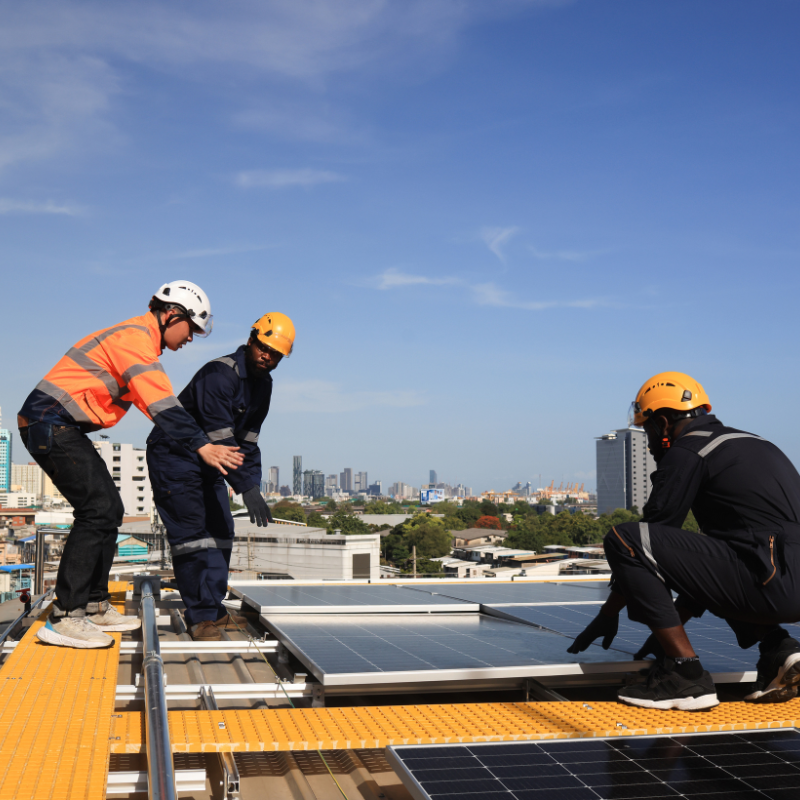
If you take a slow drive through the residential streets of Coimbatore, Madurai, or Chennai today, you’ll notice a new kind of shimmer on the rooftops. It isn’t just about the architecture anymore. In 2026, the most respected house on the street isn’t necessarily the one with the biggest gate or the newest car; it’s the one with a sleek, black solar array.
There is a growing sense of Solar Pride in Tamil Nadu. It’s that quiet satisfaction you feel when you see your neighbor’s forehead wrinkle at the latest TANGEDCO tariff hike, while you know your electricity costs are locked at near zero for the next twenty-five years. But beyond the bragging rights, is a solar roof truly your best financial investment this year?
When you look at the 2026 energy landscape, the answer is a resounding Yes.
Why Tamil Nadu Homeowners are Switching to Solar This Year
The Status Symbol Shift in Chennai and Coimbatore
In our culture, we take immense pride in our homes. We call them Illams—sanctuaries built for generations. Traditionally, we invested in gold and land to secure our family’s future. But in 2026, a Solar-Ready home has become the new gold standard. It signals that the owner is forward-thinking, tech-savvy, and financially disciplined.
When your guests arrive and see those panels, they don’t just see hardware; they see a family that has achieved energy independence. That is a powerful statement in a world where utility costs are becoming increasingly unpredictable.
Beating the 2026 TANGEDCO Tariff Hikes
Let’s be practical. The demand on the Tamil Nadu grid has skyrocketed with the rise of electric vehicles and the constant need for air conditioning during our longer summers. As a result, electricity prices have only gone one way: Up. By installing a 3kW or 5kW system today, you aren’t just saving money; you are essentially buying your power in bulk at today’s prices to protect your family against inflation tomorrow.
The Math Behind the Pride: Is Solar Still the Best Financial Investment?
Calculating Your ROI (Return on Investment)
Most people ask, How long before the system pays for itself? In 2026, thanks to the massive efficiency of modern TOPCon solar panels, the payback period in Tamil Nadu has dropped to an incredible 4 to 5 years.
If your monthly EB bill is around 2,000, you are essentially paying for a solar system every month anyway—you’re just giving that money to the grid instead of owning the asset. Once the system pays for itself, every unit produced is pure profit. Over its 25-year lifespan, a 5kW Beamz system can save a household upwards of ₹15 to ₹18 Lakhs.
How Solar Panels Increase Your Property’s Resale Value
In the 2026 real estate market, a house with a Zero-Bill reputation sells faster and at a premium. Buyers in cities like Trichy and Salem are now specifically asking for solar-equipped homes because they know they are walking into a life without monthly overheads. Your roof is no longer just a shelter; it is an active revenue generator that increases the net worth of your property.
Claiming Your Share: The 2026 PM Surya Ghar Subsidy Guide for TN
How to Get the Full ₹78,000 Central Subsidy
The PM Surya Ghar: Muft Bijli Yojana has been a game-changer for Tamil Nadu in 2026. The government has simplified the process, making it a direct-to-bank transfer. For a residential setup of 3kW or more, the central subsidy is currently capped at ₹78,000.
At Beamz, we’ve seen how this changes the lives of middle-class families. That subsidy reduces the upfront cost so significantly that solar is now affordable for almost every homeowner with a clear roof.
Navigating the TANGEDCO Net Metering Process
Many homeowners fear the paperwork of the local EB office. But the pride of solar comes when you see that a Bidirectional Meter is installed. This meter tracks exactly how much power you send back to the grid during the day. In 2026, TANGEDCO’s net metering and the new Net Feed-In guidelines are more transparent, allowing you to bank your daytime sun and use it for your AC and lights at night for a fraction of the cost.
Built for the Soil: Why Engineering Matters in Tamil Nadu
Surviving the Northeast Monsoon and Coastal Humidity
A solar system is a 25-year commitment. You can’t just fit and forget it. In coastal regions like Thoothukudi, ECR, or Pondicherry, the salt air can eat through cheap, low-grade structures in just a few months.
We take Solar Pride in our engineering. This means using C5-rated corrosion protection and wind-resilient mounting that can withstand the high-velocity gusts of the Northeast Monsoon. A Beamz installation is built to be a permanent, rugged part of your home’s heritage.
Powering Your Future EV with Your Own Roof
Look at the streets of Coimbatore today; everyone is moving to Electric Vehicles. If you charge your EV using the grid, you’re just swapping a petrol bill for a high EB bill. But if you charge your EV from your solar roof, your daily commute becomes ₹0. This is the ultimate full-circle investment for 2026.
Frequently Asked Questions (FAQ)
How long does the installation take? Usually, 3 to 5 days for the physical work, though the TANGEDCO meter change can take 30 days.
What is the Zero-Bill concept? By generating as many units as you consume, your net bill becomes only the fixed monthly connection charge (often less than ₹100).
Do I need to clean them every day? No. A simple water rinse every 15 days is enough to clear the TN dust and keep efficiency high.
Conclusion: Join the Solar Pride Movement
The sun doesn’t send you a bill. Every morning it rises over Tamil Nadu, it offers you a choice: Continue paying for a liability or start owning your utility.
Solar Pride isn’t just about the technology; it’s about the peace of mind that comes when the sun sets and your lights stay on, your AC keeps humming, and your bank account stays full. Your roof is your best-performing asset; it’s time you started treating it like one.